 EN

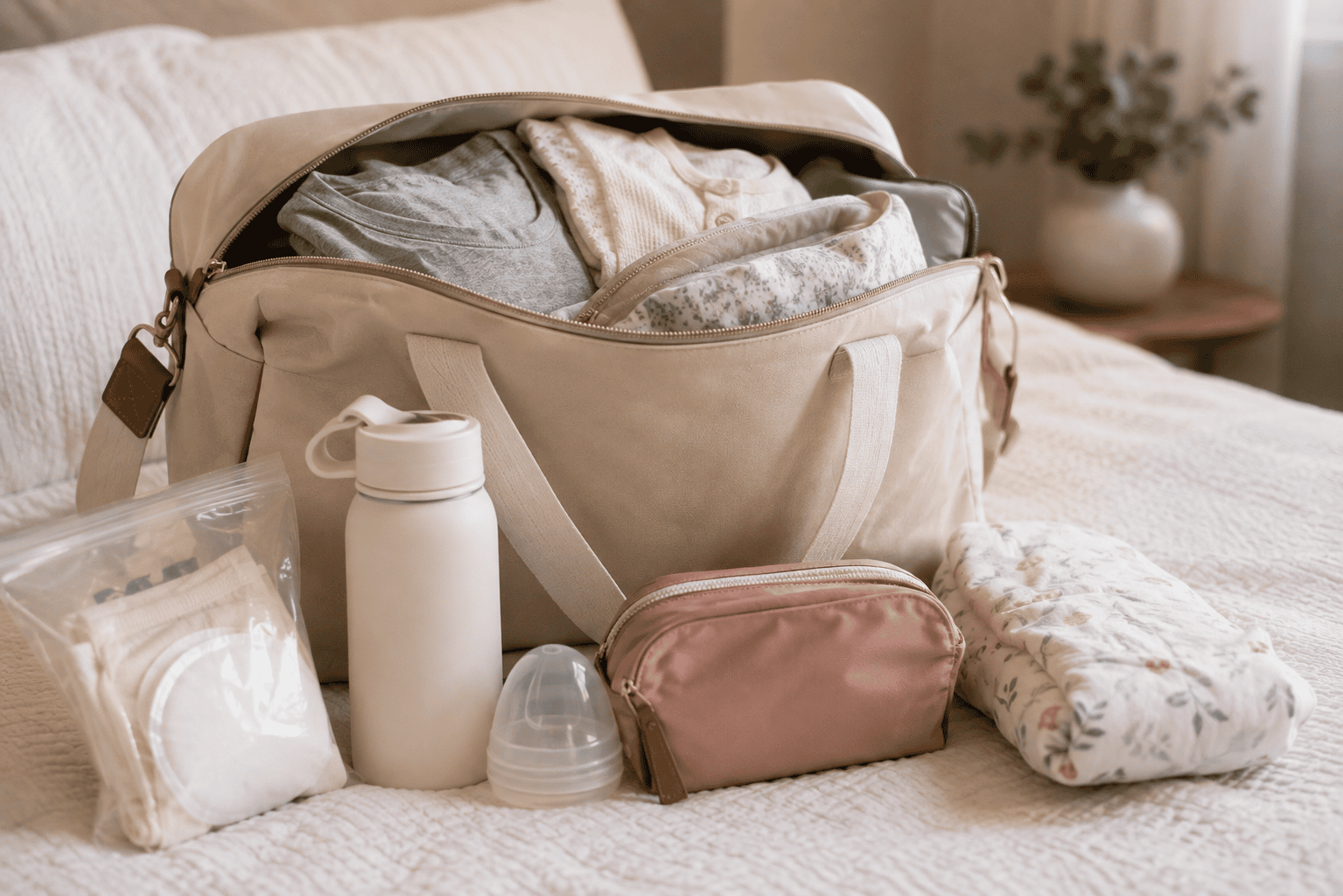
Packing for labor can become surprisingly complicated.
Search for a hospital bag checklist, and you may find lists with dozens of items: multiple outfits, pillows, blankets, speakers, nursing equipment, snacks, makeup, candles, massage tools, entertainment, and enough toiletries for a vacation.
Most parents need much less.
The purpose of a hospital bag is to make labor, recovery, and the trip home more comfortable. It does not need to prepare you for every possible situation.
Hospitals also provide many basic medical and postpartum supplies, although exactly what is available varies by facility. Before buying or packing everything on a generic list, check what your hospital provides.
Then pack around what you will actually use.
Here is a practical way to do it.
When Should You Pack Your Hospital Bag?
You do not need your hospital bag packed during early pregnancy.
However, you also probably do not want to start looking for phone chargers and comfortable underwear once labor begins.
A practical approach is to have most of the bag ready several weeks before your due date.
You can leave everyday items, such as your phone, wallet, glasses, or favorite toiletries, for later.
Keep a short last-minute list on top of the bag.
For example:
Add before leaving:
- Phone
- Wallet
- Glasses
- Daily medication
- Charging cable
- Water bottle
This makes it easier to leave home without trying to remember everything at once.
Start by Asking Your Hospital What It Provides
This is one of the best ways to avoid overpacking.
Hospitals differ.
Some provide many postpartum and newborn supplies. Others may expect you to bring more of your own items.
Before your due date, ask about items such as:
- Hospital gowns
- Postpartum pads
- Disposable underwear
- Perineal care supplies
- Diapers
- Baby wipes
- Basic baby care products
- Breast pump access
- Formula when medically needed or requested
- Towels
- Pillows
- Toiletries
Also ask whether the hospital has any packing restrictions.
If your hospital already provides something you are comfortable using, you may not need to bring your own.
Keep Your Hospital Bag Small Enough to Manage
You may be carrying your bag through a parking lot, lobby, triage area, elevator, and several hospital rooms.
A giant suitcase can quickly become inconvenient.
For many parents, one small suitcase, duffel, or weekender bag is enough.
You may also have:
- A small bag for your support person
- A baby bag for the trip home
- Your car seat already installed in the vehicle
You do not need to bring your entire nursery.
Hospital Bag Checklist: Documents and Essentials
Start with the items that are difficult to replace.
Pack or prepare:
- Photo ID
- Insurance information
- Hospital registration information, if needed
- Any paperwork your care team requested
- Birth preferences or birth plan, if you have one
- Medication list
- Important contact information
- Phone
- Wallet
- Phone charger
If your hospital uses an app or patient portal, make sure you know your login before labor.
You may also want to save the labor and delivery phone number in your phone.
Bring a Long Phone Charger
Hospital outlets are not always conveniently placed beside the bed.
A longer charging cable can make using your phone easier without repeatedly getting up.
You may use your phone for:
- Contacting family
- Taking photos
- Playing music
- Timing contractions
- Reading
- Watching videos
- Communicating with your care team through the hospital portal
A portable battery pack can also be useful, but it is optional.
What to Wear During Labor
You may be perfectly comfortable using the hospital gown.
That is often the simplest option.
If your hospital allows personal clothing and you prefer your own, choose something loose and easy to remove.
Avoid packing clothing that you would be upset about staining.
Labor and birth can be messy.
You may want:
- Loose labor gown or oversized shirt
- Comfortable socks
- Non-slip slippers
- Hair ties or clips
- Soft bra or nursing bra, if desired
Comfort matters more than creating a coordinated labor outfit.
Pack Lip Balm
Lip balm deserves a place on almost every practical hospital bag list.
Hospital air can feel dry, and labor may involve a lot of mouth breathing.
It is small, inexpensive, and easy to keep beside the bed.
Pack it somewhere you can find it quickly.
Bring Basic Toiletries
Think overnight bag, not bathroom cabinet.
A small toiletry bag might contain:
- Toothbrush
- Toothpaste
- Face wash
- Moisturizer
- Deodorant
- Shampoo
- Conditioner
- Hairbrush
- Hair ties
- Lip balm
- Contact lens supplies
- Glasses
Add the personal products you use every day.
Skip items you rarely use at home.
You probably will not suddenly need them during postpartum recovery.
Pack Glasses Even If You Usually Wear Contacts
If you wear contact lenses, bring your glasses too.
Labor can last longer than expected, and you may want to remove your contacts while resting.
Place your glasses and case somewhere easy to reach.
Bring Your Regular Medications
If you take prescription or regular medication, ask your care team what you should bring and how the hospital handles your medications during admission.
Do not assume you should take your usual medication from your own supply without informing hospital staff.
Keep an updated medication list available as well.
What to Pack for Postpartum Recovery
After delivery, comfort becomes the priority.
You may want:
- Loose pajamas
- Robe
- Comfortable underwear
- Nursing bras, if you plan to breastfeed
- Breast pads
- Comfortable socks
- Slippers
- Loose clothes for going home
Choose clothing that does not put unnecessary pressure on your abdomen.
That can be useful after either a vaginal or cesarean birth.
Choose a Very Comfortable Going-Home Outfit
Your body will not immediately return to its pre-pregnancy shape after birth.
Pack clothes that fit comfortably during late pregnancy.
A simple going-home outfit might include:
- Loose dress
- Maternity leggings
- Soft pants
- Oversized shirt
- Cardigan or sweatshirt
- Easy shoes
You do not need a special outfit unless you want one.
Comfort is the useful criterion.
Consider C-Section Comfort Even If You Are Not Planning a C-Section
You do not need to pack an entirely different bag for a possible cesarean birth.
However, choosing comfortable clothing that sits above or away from the lower abdomen can make your bag more adaptable.
High-waisted underwear and loose clothing may feel more comfortable around an incision.
Your hospital will provide instructions for incision care if you have a cesarean delivery.
What About Postpartum Pads and Disposable Underwear?
Many hospitals provide basic postpartum supplies.
Before packing large packages of pads, disposable underwear, or perineal products, ask what your hospital gives patients.
You may prefer bringing a few personal favorites.
However, you probably do not need an entire postpartum bathroom kit in your hospital bag if equivalent supplies will already be available.
Save the larger stock for home.
What to Pack If You Plan to Breastfeed
You do not need extensive breastfeeding equipment in your hospital bag.
Consider:
- One or two nursing bras
- Nursing-friendly pajamas
- Breast pads
- Nipple care product you already plan to use
- Nursing pillow, if you strongly prefer your own
A large breastfeeding pillow can take up significant space, so decide whether the comfort is worth carrying it.
Hospitals may also have lactation support available. Ask ahead of time if meeting with a lactation consultant matters to you.
Do You Need to Bring Your Breast Pump?
Usually, this is worth checking with your hospital rather than automatically packing one.
Hospitals may have pumps available when pumping is medically indicated or helpful during the stay.
If you already use a specific pump, have special circumstances, or want instruction on your own equipment, ask whether bringing it makes sense.
Otherwise, a pump can become another bulky item you never remove from the bag.
Pack a Few Comfort Items for Labor
Comfort items can help, but keep the list small.
Consider one or two things you know you will actually use.
For example:
- Massage ball
- Small handheld fan
- Headphones
- Favorite playlist
- Eye mask
- Small personal pillow
- Heating pad if your hospital permits it
Avoid packing a full collection of labor tools unless you regularly use them or your birth plan specifically includes them.
Hospital rooms already contain a lot of equipment.
Snacks Can Be Useful
Your support person will probably need food, and you may want snacks at different points during your stay depending on your care team’s instructions.
Pack simple, shelf-stable options such as:
- Granola bars
- Crackers
- Nuts
- Dried fruit
- Protein bars
Check your hospital’s policies about food during labor.
Also find out whether cafeterias, vending machines, or nearby food options are available overnight.
Bring a Refillable Water Bottle
A reusable water bottle can be useful during your hospital stay.
Choose one that:
- Does not leak
- Is easy to open
- Has a straw if you prefer one
- Can sit beside your bed
Your hospital may provide water cups or pitchers, so this is a convenience rather than an essential.
What Your Support Person Should Pack
The support person should have a small bag too.
They may need:
- Change of clothes
- Comfortable shoes
- Toiletries
- Phone charger
- Snacks
- Water bottle
- Any necessary medication
- Wallet
- Sweater or sweatshirt
Hospitals can feel cold, especially overnight.
Your support person should also be prepared to manage their own basic needs rather than depending on the person in labor to remember their supplies.
Give Your Support Person a Job Before Labor
Packing is easier when responsibilities are clear.
Your support person can be responsible for:
- Keeping IDs and documents accessible
- Carrying the bags
- Managing phone chargers
- Updating family if you want updates sent
- Knowing where the car is parked
- Keeping snacks available
- Bringing your last-minute items
- Making sure the car seat is ready
This reduces the number of small decisions you have to manage during labor.
What to Pack for Your Baby
Newborns generally need very little during the hospital stay.
Your hospital may provide diapers, wipes, blankets, and basic care supplies.
For going home, consider packing:
- One newborn-size outfit
- One 0–3 month outfit
- Socks if the outfit does not cover the feet
- Weather-appropriate outer layer
- Hat if appropriate for the weather
- One light blanket for use outside the car seat
Packing two clothing sizes is useful because babies vary considerably in size at birth.
You do not need several days of baby outfits.
Choose a Simple Going-Home Outfit for Baby
The baby’s going-home outfit should work with the car seat harness.
A sleeper with separate legs is often practical.
Avoid bulky clothing underneath the car seat harness.
For colder weather, secure the baby in the car seat first. Then use appropriate layers or a blanket over the harness rather than placing thick, bulky material between your baby and the harness.
Install the Car Seat Before Labor
If you plan to drive your baby home, the car seat deserves more attention than almost anything inside your hospital bag.
Install an appropriate rear-facing car seat before your due date.
The National Highway Traffic Safety Administration recommends carefully following both the car seat manual and your vehicle manual. The car seat should be installed in the back seat, and the harness should fit the baby snugly.
If you are unsure about installation, a certified Child Passenger Safety Technician can help.
Do this before labor if possible.
Trying to learn car seat installation in a hospital parking lot with a newborn is an unnecessary complication.
Do Not Put Bulky Clothing Under the Car Seat Harness
A thick coat or bulky blanket can interfere with proper harness fit.
Instead, buckle your baby securely into the seat according to the manufacturer’s instructions.
Then add appropriate warmth over the harness when needed.
Always follow the instructions for your specific car seat.
You Probably Do Not Need a Huge Supply of Diapers
Ask your hospital what newborn supplies it provides.
Many hospitals supply basic diapers during the stay.
Even if you prefer a particular brand at home, you probably do not need to pack an entire package unless your hospital specifically asks you to bring diapers.
Keep your home diaper supply at home.
Do You Need a Baby Blanket?
You may want one light blanket for the trip home or for weather protection outside the vehicle.
However, remember that a loose blanket is not part of a safe infant sleep environment.
The American Academy of Pediatrics recommends a firm, flat sleep surface without loose blankets, pillows, toys, or other soft objects.
A blanket you pack for transportation or supervised use should not automatically become a sleep blanket once your baby is home.
What You Can Probably Leave at Home
Hospital bag lists often become excessive because every optional item gets treated like an essential.
You may not need:
- Multiple baby outfits
- A large package of diapers
- Full-size toiletries
- Several blankets
- Large quantities of postpartum products
- Multiple pillows
- Several pairs of shoes
- Large amounts of entertainment
- Decorative baby accessories
- Your entire breastfeeding setup
- Large bottles of skincare products
Pack based on function.
If an item has no clear purpose during labor, recovery, or the trip home, it can probably stay home.
Do You Need Makeup?
Only if you genuinely want it.
If putting on makeup helps you feel comfortable and normal, pack a small makeup bag.
If you rarely wear makeup, you do not need to bring it because hospital bag photos online suggest that you should.
The same applies to hair tools.
This is your hospital stay, not a packing competition.
Do You Need Your Own Pillow?
Maybe.
A familiar pillow can make sleeping or resting more comfortable.
However, pillows are bulky and easy to leave behind.
If you bring one, use a distinctive pillowcase so it does not get confused with hospital linens.
If you sleep comfortably without it, leave it home.
Do You Need Entertainment?
Labor and postpartum stays involve waiting, but you may also be too tired or occupied to use much entertainment.
Your phone may be enough.
If you want something else, choose one item:
- Tablet
- E-reader
- Book
- Headphones
You probably do not need all four.
Do You Need a Birth Plan in Your Hospital Bag?
If you have written birth preferences, bring a copy or make sure they are available electronically.
Keep the document concise.
Useful topics may include preferences about:
- Pain management
- Labor environment
- Support people
- Immediate newborn care
- Feeding plans
A birth plan is better understood as a communication tool than a guarantee that labor will follow a specific sequence.
Medical circumstances can change.
Discuss important preferences with your care team before labor whenever possible.
Consider Packing an Empty Bag
This sounds unnecessary until it becomes useful.
You may leave the hospital with more items than you brought.
You could have:
- Paperwork
- Postpartum supplies
- Baby supplies
- Gifts
- Personal items that were removed from their original bags
A lightweight foldable tote takes almost no space and can make discharge easier.
Keep Valuable Items to a Minimum
Avoid bringing expensive jewelry or unnecessary valuables.
You may move between rooms during your stay, and keeping track of extra items adds work.
Bring what you need.
Leave the rest safely at home.
Use Packing Cubes or Small Pouches
Organization matters more than quantity.
A few pouches can make your hospital bag easier to use.
For example:
Labor pouch
- Lip balm
- Hair ties
- Headphones
- Massage tool
Toiletry pouch
- Toothbrush
- Toothpaste
- Face wash
- Deodorant
- Hairbrush
Baby pouch
- Two outfits
- Socks
- Small blanket
Electronics pouch
- Chargers
- Battery pack
- Headphones
Your support person can find an item without emptying the entire suitcase onto the hospital floor.
Pack in the Order You Will Need Things
Put frequently used items near the top.
That includes:
- Documents
- Phone charger
- Lip balm
- Hair ties
- Glasses
Going-home clothes can stay at the bottom.
You will not need them until discharge.
This small decision makes the bag easier to use.
Make a Separate Last-Minute Checklist
Some essentials cannot stay packed for weeks.
Create a short note such as:
Before leaving home:
- Phone
- Wallet
- Glasses
- Medications
- Water bottle
- Everyday charger
- Pillow
- Refrigerated snacks
Put the note:
- On the hospital bag
- By the front door
- On your phone
- On the refrigerator
Do not depend on memory during labor.
Put the Hospital Bag Somewhere Easy to Grab
Once the bag is packed, do not bury it in a closet.
Keep it somewhere predictable.
For example:
- Near the bedroom door
- In an entry closet
- Near the garage
- In another easy-to-access location
Make sure your support person knows where it is.
You should not be the only person who understands the system.
Should You Keep the Hospital Bag in the Car?
It may sound convenient, but think about your local temperatures and the items in the bag.
Extreme heat or cold may not be appropriate for:
- Medication
- Electronics
- Toiletries
- Food
- Certain personal products
Keeping the bag inside the house near your exit is often simpler.
Pack for Your Actual Hospital Stay
Your packing needs may differ depending on your circumstances.
For example, you may pack differently if you expect:
- A scheduled cesarean birth
- An induction
- A longer hospital stay
- A birth center delivery
- A high-risk delivery
- An extended newborn stay
Ask your care team whether your circumstances require anything specific.
A generic internet checklist should not override instructions from your hospital or obstetric care team.
A Minimal Hospital Bag Checklist
If you want to keep the bag very simple, start here.
For Mom
- Photo ID
- Insurance information
- Phone
- Long charger
- Birth preferences
- Medication list
- Glasses
- Toiletries
- Hair ties
- Lip balm
- Comfortable socks
- Slippers
- Nursing or comfortable bra
- Loose pajamas
- Comfortable underwear
- Going-home clothes
For Baby
- Newborn outfit
- 0–3 month outfit
- Weather-appropriate layer
- Socks if needed
- Light blanket for transportation or supervised use
- Properly installed rear-facing car seat
For the Support Person
- Change of clothes
- Toiletries
- Medication
- Phone charger
- Snacks
- Water bottle
- Comfortable shoes
- Sweater
For many families, that is enough.
Optional Hospital Bag Items
Add these only if you expect to use them:
- Nursing pillow
- Breast pump
- Personal pillow
- Eye mask
- Small fan
- Massage tool
- Tablet or e-reader
- Portable battery
- Makeup
- Camera
- Extra postpartum products
Optional means optional.
Your hospital stay will not fail because you forgot a portable fan.
A Simple Hospital Bag Packing System
Instead of packing everything at once, use three stages.
Around the early third trimester
Research your hospital.
Ask what it provides and what you need to bring.
Several weeks before your due date
Pack everything you do not use daily.
This can include:
- Baby clothes
- Extra toiletries
- Pajamas
- Support-person clothing
- Documents
- Optional comfort items
Before leaving for the hospital
Use your last-minute checklist.
Add:
- Phone
- Wallet
- Medication
- Glasses
- Everyday toiletries
- Water bottle
This prevents both overpacking and last-minute panic.
Common Hospital Bag Packing Mistakes
Packing for every possible scenario
You are going to a hospital, not somewhere completely without supplies.
Focus on comfort and personal essentials.
Bringing too many baby clothes
Your newborn probably does not need a complete wardrobe during the hospital stay.
Forgetting your support person
They need clothes, toiletries, medication, food, and a charger too.
Packing the car seat inside your mental hospital bag list
The car seat is not technically inside the bag, but it is one of the most important things to prepare before bringing your baby home.
Waiting until labor to install the car seat
Install and learn how to use it before you need it.
Forgetting chargers
Your phone is likely to become your camera, communication device, entertainment system, and contact list.
Buying everything on someone else’s checklist
A list can suggest options.
It should not create obligations.
Frequently Asked Questions About Hospital Bags
When should I pack my hospital bag?
Having most of your bag ready several weeks before your due date can prevent last-minute packing. Keep daily-use items on a separate list so you can add them before leaving.
What should I pack in my hospital bag for labor?
Start with identification, insurance information, comfortable clothing, toiletries, a phone charger, lip balm, glasses, medication information, and a few personal comfort items.
What should I pack for my baby?
Most newborns need only a simple going-home outfit, a backup size, weather-appropriate clothing, and a properly installed rear-facing car seat. Ask your hospital whether it provides diapers, wipes, and other newborn supplies.
How many baby outfits should I bring to the hospital?
One newborn-size outfit and one 0–3 month outfit are usually a practical starting point. Your hospital’s policies and expected length of stay may affect what you need.
Should I bring diapers to the hospital?
Ask your hospital. Many provide basic newborn supplies during the stay, so you may not need to pack a full diaper supply.
Should I bring my breast pump?
Check with your hospital. If you have specific pumping needs or want help using your personal pump, bringing it may be useful. Otherwise, it may not be necessary.
Should I bring formula?
Discuss this with your hospital and care team, especially if you already have a specific feeding plan or your baby has particular medical needs. Hospital practices and available supplies vary.
Do I need a car seat before going to the hospital?
If your baby will travel home by car, prepare an appropriate rear-facing car seat before delivery. Learn how to install and use it according to the car seat and vehicle manufacturers’ instructions.
What should I wear home after giving birth?
Choose loose, comfortable clothing that fit you during late pregnancy. Your abdomen and body will still be recovering after delivery.
What should my partner pack?
A support person should bring comfortable clothes, toiletries, medication, a phone charger, snacks, water, and anything needed for an overnight stay.
Final Thoughts
A useful hospital bag checklist should make your trip to the hospital easier, not give you another pregnancy project to complete.
Start with the items that are difficult to replace: identification, insurance information, medication details, glasses, your phone, and a charger.
Then add a few things that make labor and recovery more comfortable.
Pack simple clothes for yourself. Bring one or two outfits for the baby. Give your support person responsibility for their own essentials. Prepare the rear-facing car seat before labor.
Most importantly, check what your hospital already provides.
You do not need to carry everything you might possibly use.
A well-packed hospital bag is usually smaller than the internet makes it look.